

 Colombia
 México
 Italia
 Francia
 Alemania
💪 5 Leg Exercises at Home to Gain Energy and Mobility
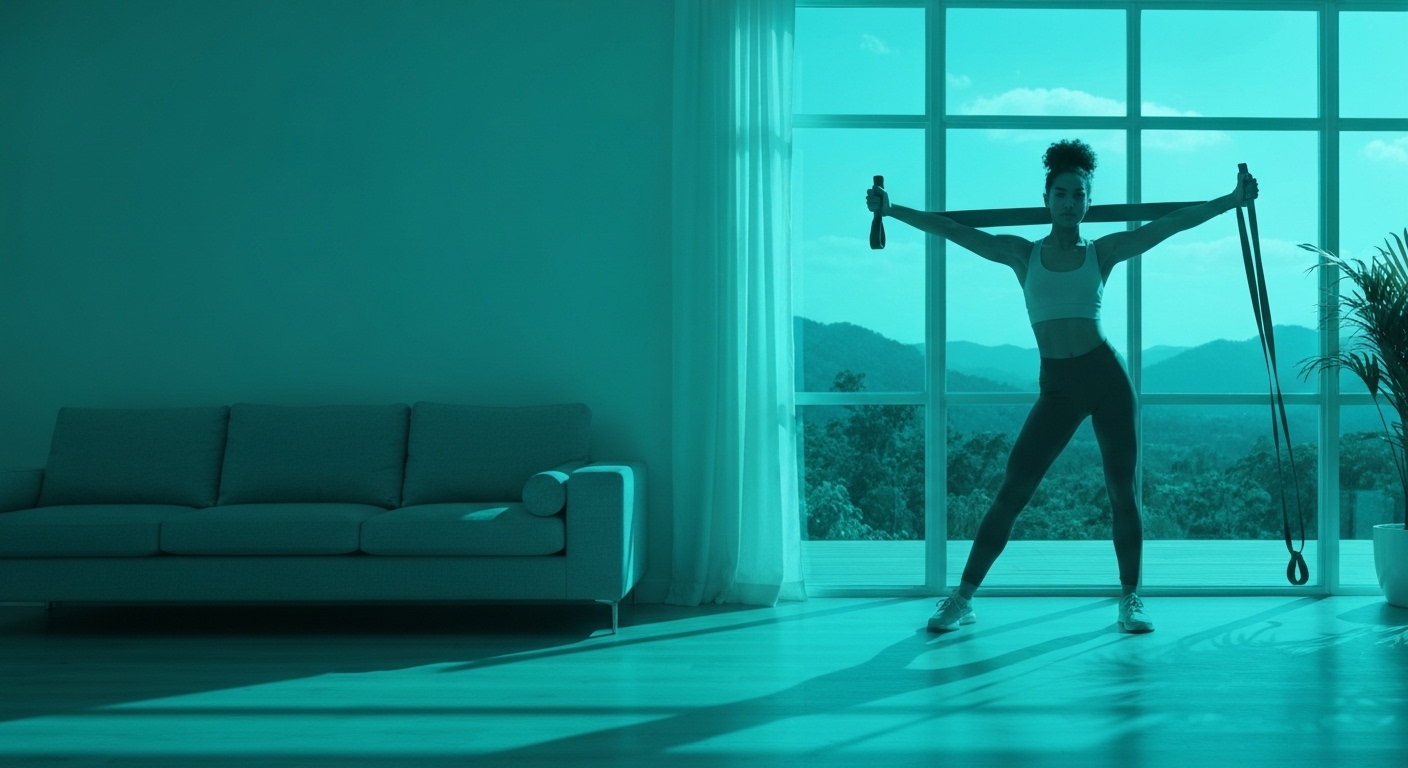
The Importance of Activating Our Lower Body
In today's fast-paced life, it is common to spend long hours sitting in front of a screen or performing repetitive movements that do not challenge our muscles. This lack of activity often translates into a feeling of heaviness, lack of energy, and, in the long run, a loss of mobility that affects our quality of life. However, integrating leg exercises at home does not require significant time investments or expensive equipment.
Our legs are the fundamental support of the body. They house some of the largest muscle groups, such as the quadriceps, glutes, and hamstrings. Keeping them active not only improves our aesthetics but is vital for metabolic health, blood circulation, and the stability of our joints. When we activate these areas, we send a signal of vitality to the entire organism.
Why Do Leg Exercises at Home?
The main barrier for many people is logistics: travel time to the gym, membership costs, or the intimidation they feel when using complex machines. Leg exercises at home eliminate these barriers, making wellness accessible to everyone, regardless of their initial fitness level.
Regular leg training helps to:
- Improve circulation: Movement aids venous return, reducing the feeling of tired legs.
- Increase energy expenditure: By working large muscles, the body consumes more energy even at rest.
- Strengthen posture: Strong legs and glutes better support the pelvis and lower back.
- Gain autonomy: Everyday movements like climbing stairs or getting up from a chair become much easier.
Fundamental Exercises for Your Easy Routine
For a routine to be effective, it does not need to be complicated. Here are five basic movements you can perform in any corner of your home using only your body weight.
1. Squats: The King of Exercises
The squat is a functional movement that we mimic every time we sit down and stand up. It is ideal for working the quadriceps and glutes comprehensively.
How to do it: Place your feet shoulder-width apart. Imagine you are going to sit in an invisible chair behind you. Keep your chest upright and lower your hips to a comfortable level, ensuring that your heels do not lift off the ground. Push strongly upwards to return to the starting position.
2. Lunges
This exercise is excellent for working balance and unilateral strength, which helps correct muscle imbalances.
How to do it: Take a long step forward. Lower your hips until both knees form an angle of approximately 90 degrees. The back knee should be close to the ground but not touching it. Keep your torso straight and return to the starting position alternating legs.
3. Glute Bridge
Many times we forget the back of our legs. The glute bridge is a low-impact but very effective exercise for the posterior chain and lower back.
How to do it: Lie on your back with your knees bent and feet flat on the ground. Raise your hips towards the ceiling, squeezing your glutes at the top. Hold for a second and lower slowly. It is a very safe exercise for those with knee sensitivity.
4. Heel Raises
We cannot forget the calves. This exercise is key for ankle health and circulation.
How to do it: Stand with your feet parallel, rise up on your toes as high as you can. Hold your balance for a moment and lower gently. You can lean against a wall or chair if you need stability.
5. Side Leg Raises
This movement focuses on the abductors and hip stability, areas that often weaken from spending too much time sitting.
How to do it: Lie on your side with your legs extended. Raise the top leg towards the ceiling without rotating the hip forward or backward. Lower with control. This exercise is fantastic for strengthening the muscles that stabilize the pelvis while walking.
Practical Routine to Start Today
This routine is designed to be completed in about 20 minutes. You don't need equipment, just a small space and comfortable clothing.
Phase 1: Warm-Up (5 minutes)
- March in place lifting knees gently: 2 minutes.
- Ankle rotations and hip circles: 2 minutes.
- Gentle lateral movements (side steps): 1 minute.
Phase 2: Main Activity (12-15 minutes)
Perform 3 sets of the following circuit, resting 45 seconds between each exercise:
- Squats: 12 to 15 repetitions.
- Alternating Lunges: 10 repetitions per leg.
- Glute Bridge: 15 repetitions.
- Heel Raises: 20 repetitions.
- Side Raises: 12 repetitions per side.
Phase 3: Cool Down (3-5 minutes)
- Gentle quadriceps stretch (holding the foot from behind).
- Hamstring stretch (sitting with legs extended trying to reach the feet).
- Deep breaths to relax the body.
Tips for Maintaining Sustainability
The secret to leg exercises at home is not extreme intensity, but consistency. It is better to train for 15 minutes three times a week than to have a two-hour session once a month. Listen to your body: if you feel sharp discomfort, stop. The goal is to feel your muscles working, not to generate joint pain.
Remember that wellness is a journey of small steps. Celebrating that you decided to move today is the first step to building a habit that will accompany you for life.
Explore more health tips in our articles on:
- Healthy habits to start your morning with energy
- Guide to simple stretches to do in the office
- The importance of hydration during physical exercise
Frequently Asked Questions
For beginners, it is recommended to start with 2 or 3 times a week, allowing at least one day of rest between sessions to allow for muscle recovery.
It is not strictly necessary, especially at first. Your own body weight provides enough resistance to strengthen and tone. Once you feel comfortable, you can add resistance with household items like water bottles.
Make sure your technique is correct: the weight should go to your heels and your knees should not excessively pass the tips of your toes. If the pain persists, reduce the range of motion or substitute the exercise with the glute bridge, which is kinder to the joints.
Activa tu bienestar hoy
Empieza con una rutina sencilla y construye el hábito paso a paso.


