

 Colombia
 México
 Italia
 Francia
 Alemania
💪 Home Workout Guide Without Equipment: Activate Your Body Realistically and Sustainably
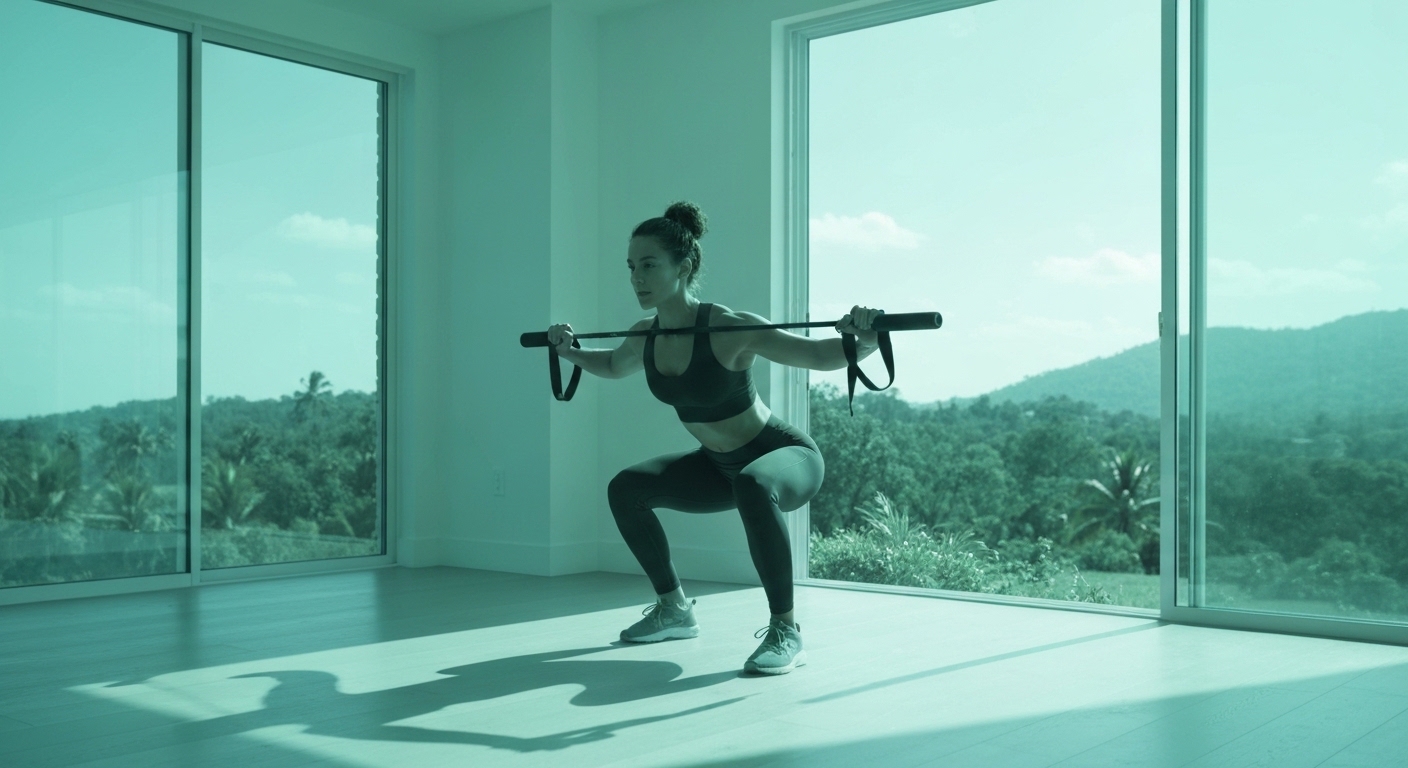
The Challenge of Staying Active in a Sedentary World
Today, lack of time, long work hours, and mental exhaustion have become the main barriers to taking care of our physical health. Many people believe that to get fit, it is mandatory to pay for an expensive gym subscription or acquire sophisticated machines that end up taking up space and gathering dust. However, the reality is much simpler: your own body is the most powerful tool you have to improve your well-being.
Home exercises without equipment are not just an economical alternative; they are a real solution for those looking to integrate movement into their daily lives flexibly. Sedentary behavior not only affects our physical condition but also directly impacts our mood, energy levels, and sleep quality. Activating the body should not be a torture but an act of self-care that adapts to your lifestyle.
Why Choose a Home Workout?
The main advantage of doing a home workout is the elimination of frictions. There are no commutes, no rigid schedules, and no social pressure. You can start whenever you have 20 free minutes, whether before starting your workday or at the end of the day to release tension.
Moreover, working with your own body weight (basic calisthenics) allows you to develop functional strength. This means that the movements you practice in your routine have a direct transfer to your daily activities, such as carrying groceries, climbing stairs, or maintaining good posture in front of the computer. By focusing on easy but effective exercises, we build a solid foundation that reduces the risk of injury and improves joint mobility.
The Right Mindset: Progress Over Perfection
One of the biggest mistakes when starting a weightless routine is trying to do everything perfectly from day one. Well-being is not a sprint but a marathon of consistency. You don’t need to train for two hours a day; in fact, science suggests that short and frequent sessions are much more effective for creating a lasting habit than exhausting sessions that you end up abandoning after a week.
Key Movements to Activate the Whole Body
For a routine to be balanced, we must work the major muscle groups. Here are some fundamental movements you can perform in any corner of your home:
- Squats: The king exercise for the lower body. Strengthens legs and glutes, and improves core stability.
- Push-ups: Ideal for working the chest, shoulders, and triceps. If you are a beginner, you can support yourself on your knees or even against a wall.
- Lunges: Excellent for balance and unilateral leg strength.
- Plank: A static exercise that strengthens the entire abdominal area, protecting the lower back.
- Glute Bridge: Helps activate the posterior chain, essential if you spend many hours sitting.
Practical Routine to Start Today
This routine is designed to last approximately 20 to 25 minutes. You need nothing more than a small space and comfortable clothing. Remember to listen to your body and rest if you need to.
1. Warm-up (5 minutes)
- Joint rotations (neck, shoulders, wrists, and ankles): 1 minute.
- March in place raising knees: 2 minutes.
- Circular hip movements: 2 minutes.
2. Main Block (15 minutes)
Perform 3 sets of the following circuit. Rest for 45 seconds between each exercise and 90 seconds between sets.
- Controlled Squats: 12 repetitions. (Make sure to keep your back straight and lower as if you were going to sit in an invisible chair).
- Push-ups (on the floor or wall): 10 repetitions. (Keep your elbows at a 45-degree angle from your body).
- Alternating Lunges: 10 repetitions per leg. (Step forward and lower the back knee toward the ground).
- Plank: Hold the position for 20 to 30 seconds. (Avoid letting your hips drop or rise too high).
3. Cool Down and Stretch (5 minutes)
- Gentle stretching of legs and back.
- Deep breaths: Inhale for 4 counts, hold for 2, and exhale for 6 counts to relax the nervous system.
Tips for Maintaining Consistency
The success of home exercises without equipment lies in repetition. Here are three practical tips to avoid giving up:
- Set a Schedule: Try to train at the same time so your brain identifies it as a natural part of your day.
- Prepare the Environment: Leave your sports clothes ready the night before. Reducing small decisions helps overcome laziness.
- Celebrate Small Victories: If today you could only do 10 minutes, that’s okay! It’s better than zero. Value the effort of having moved.
Frequently Asked Questions (FAQ)
Is it possible to gain strength only with home exercises without equipment?
Yes, it is entirely possible. By using your body weight, you can increase the difficulty by varying the pace (making the movements slower), increasing repetitions, or reducing rest times.
How many times a week should I train?
For beginners, it is ideal to start with 3 times a week on alternate days. This allows your muscles and joints to recover properly while building the habit.
What should I do if my joints hurt when training?
Exercise can cause muscle fatigue, but it should not cause sharp pain in the joints. If you feel discomfort, check your technique in front of a mirror or reduce your range of motion. If the pain persists, consult a professional.
Explore more about well-being in our related articles:
Activa tu bienestar hoy
Empieza con una rutina sencilla y construye el hábito paso a paso.


